The Master of the Clockwork Universe
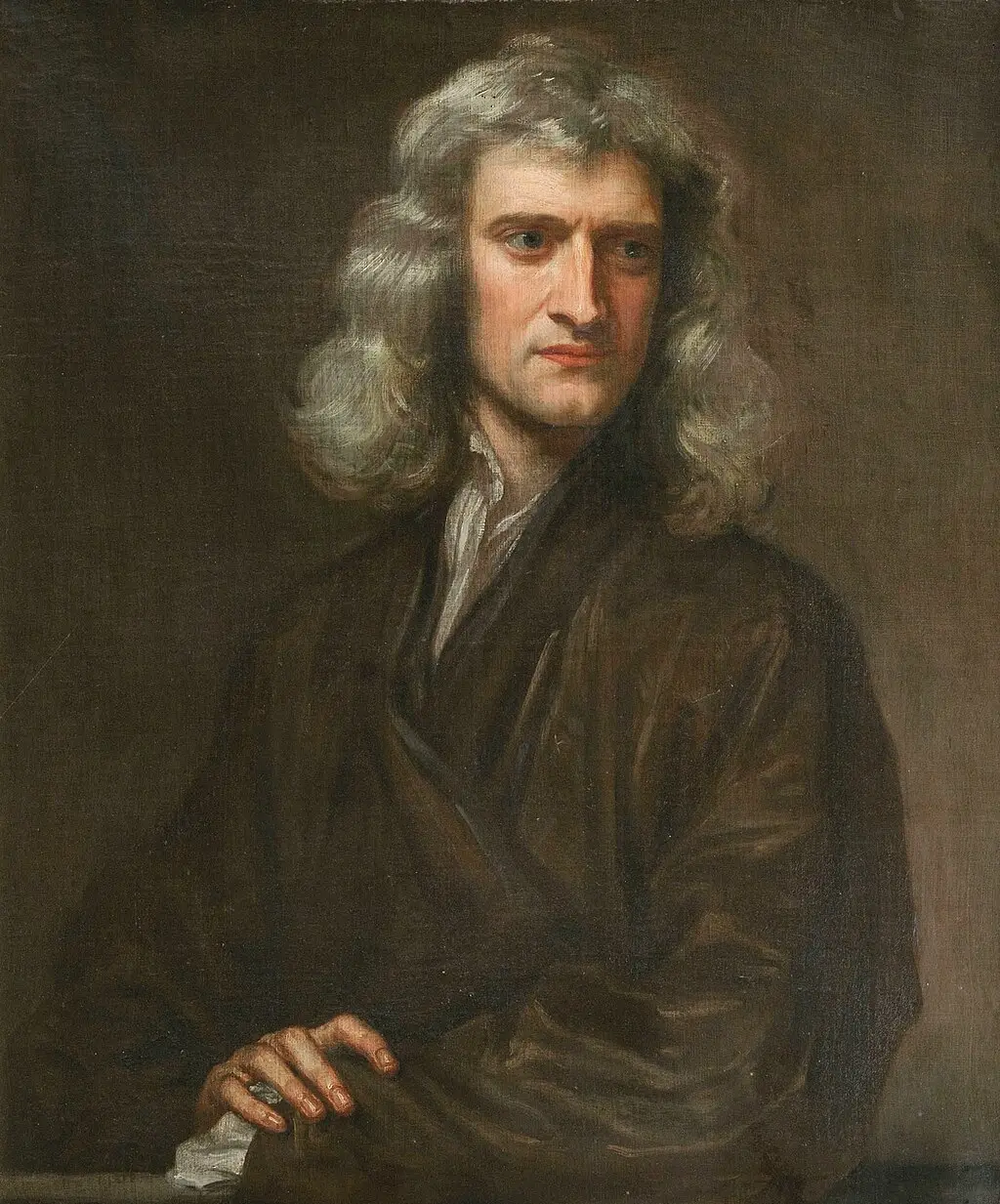
Isaac Newton
""If I have seen further it is by standing on the shoulders of Giants.""
By PERSONS Editor2026. 2. 15.
b8 Analytical
The Architect of Universal Order
Isaac Newton: Piercing Chaos with a Single Principle
Complementary Mentoring for: INFP, ENFJ, ISFP, ESFJ
"Driven by values and emotions, these types need Analytical thinking to ground their decisions in objective data and cold, hard logic."
The Iconic Scene
1666 | Woolsthorpe, England - The Year of Wonders
During the 'Annus Mirabilis' when schools were closed due to the Great Plague, Newton sat in his garden, lost in contemplation. An apple fell from a tree. To others, it was a mundane event; to Newton’s Analytical brain, it was a catalyst for a profound question.
"Why does the apple always descend perpendicularly to the ground? Why not sideways or upwards, but constantly to the earth's center?"
He didn't rely on intuition. He began dissecting the lunar orbit, centrifugal force, and gravity using cold mathematics. When existing tools failed to explain these changes, he simply invented a new analytical method: Calculus. He proved that an apple on Earth and planets in the heavens obey the same law: $$F = G \frac{m_1 m_2}{r^2}$$. By analyzing fragmented observations, he built the grand system of the Principia.
Why you need Newton’s Analysis
01
Root Cause Analysis: Tracking the 'Why'
An analytical person doesn't stop at the phenomenon (the falling apple); they find the cause (gravity). Instead of panicking when a problem arises, break it down into its components. Like Newton, keep asking questions until you hit the bedrock principle.
02
Processing Data without Emotion
In an age ruled by mysticism, Newton analyzed the world using the objective language of 'mathematics.' When emotions or prejudices cloud a situation, an analytical attitude—translating factors into logic and numbers—helps you reach the correct decision.
"Does a problem look too massive to handle? Newton sharpened the blade of calculus to solve the puzzle of the universe. Split your worries into tiny units. Don't solve it all at once; analyze what can be quantified. Logic is the strongest weapon against vague anxiety."
Digest Summary
Analysis isn't making things complex; it's peeling layers to reach the truth.
Action: Use the '5 Whys' on one problem today